How Tournament Schedules Shape Poker Reward Claims in Competitive Play
Ines Perry · Aug 23, 2026
How Tournament Schedules Shape Poker Reward Claims in Competitive Play
Tournament schedules in poker create structured timelines that directly influence when and how players access reward claims across various platforms; these calendars outline start dates, registration periods, and payout structures that often align with promotional windows for bonuses and loyalty incentives. Data from industry reports shows that major events cluster around specific months, which means reward systems must accommodate fluctuating participation levels throughout the year. Observers note that platforms adjust their claim processes to match these peaks, ensuring players meet eligibility criteria tied to entry volumes and prize pools.
Alignment Between Event Dates and Claim Windows
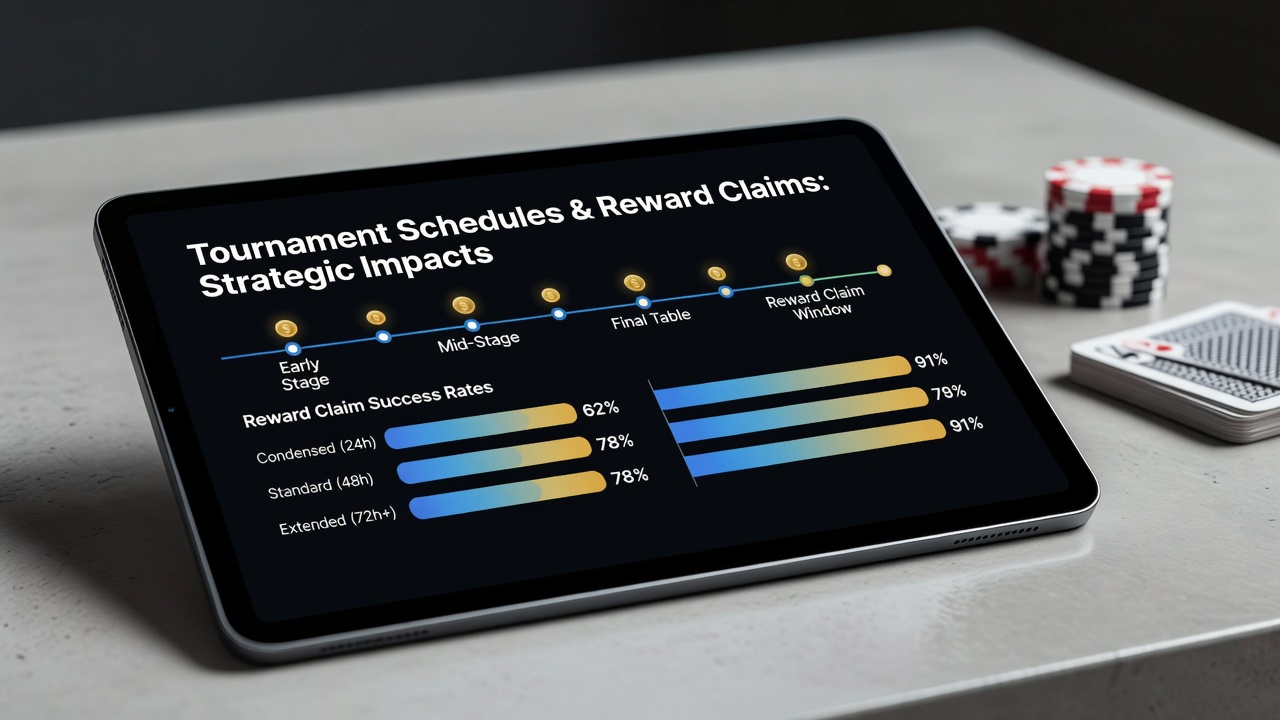
Poker platforms design reward systems around recurring tournament series, such as those held in the summer circuit or international festivals, so claim deadlines frequently coincide with registration cutoffs or final table payouts. Research indicates that when a high-profile event begins mid-month, many operators extend bonus claim periods by several days to capture increased player activity. Those who've tracked these patterns find that staggered start times across regions allow for continuous reward availability, while overlapping schedules in August 2026 may compress claim windows and require faster verification steps for participants.
Figures from gaming associations reveal that players who enter multiple events in quick succession often face layered requirements, including minimum hands played or accumulated points, before rewards unlock. This setup connects directly to schedule density, as tighter calendars leave less buffer for completing playthrough conditions. Experts have observed that regional variations matter too, with North American circuits emphasizing weekend blocks and European tours spreading events across weekdays to balance server loads and claim processing.
Effects on Eligibility and Verification Procedures
Eligibility for poker rewards hinges on schedule-driven factors like total buy-ins completed during a defined window, and operators cross-reference these against tournament results to approve claims. Studies from academic sources show that longer-running series give players more flexibility to accumulate qualifying activity, whereas short one-day events demand precise timing for reward activation. When schedules shift due to venue changes or regulatory updates, claim systems update automatically to reflect new participation metrics.
Platforms integrate real-time tracking tools that pull data from official tournament feeds, which reduces errors in reward distribution during busy periods. According to reports by the American Gaming Association, accurate schedule synchronization helps maintain compliance across jurisdictions where bonus terms vary by player location. Those monitoring trends note that in August 2026, overlapping global events could increase verification demands, prompting operators to streamline documentation uploads tied to each claim.

Regional Schedule Variations and Reward Access
Different geographic circuits operate on distinct calendars that affect how rewards flow to international participants, with Asian tours often running during off-peak Western months and creating staggered claim opportunities. Data compiled by the Australian Institute of Criminology highlights how these offsets allow year-round activity, yet they also create gaps where certain bonuses expire before a player finishes required tournament entries. Platforms address this by offering region-specific promotions that mirror local event timings.
Canadian regulatory bodies have documented similar patterns, where provincial poker leagues align reward claims with provincial festival dates to encourage sustained engagement. When schedules include satellite qualifiers leading into main events, reward systems incorporate progressive bonuses that build across multiple claim stages. Observers point out that such layered structures depend entirely on predictable calendar releases, which operators publish months ahead to let players plan their participation and claim strategies accordingly.
Technical Integration of Schedules Into Reward Platforms
Modern poker sites embed tournament calendars directly into their backend systems, automatically adjusting reward parameters based on event start and end dates. This integration ensures that playthrough requirements scale with prize pool sizes, as larger August 2026 festivals typically trigger higher bonus tiers. Research from university gaming studies demonstrates that automated syncing minimizes delays in claim approvals during high-volume periods.
Operators also use these schedules to forecast server capacity and staff claim review teams, since sudden influxes from marquee events can strain processing times. Industry organizations report that clear communication of schedule changes helps players avoid missed deadlines, particularly when events extend into extra days or face weather-related postponements in outdoor venues. The result ties reward access tightly to the reliability of published timetables across all participating platforms.
Conclusion
Tournament schedules function as the backbone for poker reward ecosystems by dictating timing, eligibility thresholds, and regional availability. Data shows that precise alignment between event calendars and claim procedures supports smooth operations, while shifts in dates require rapid system adjustments. Players benefit from understanding these connections, as they determine access to bonuses tied to participation across global circuits including those planned for August 2026. Continued monitoring by regulatory and research bodies helps maintain consistency in how these systems operate worldwide.